LESSON SIX
How Cut Paper Changed the World
The Cut-Outs: A Revolutionary Late Life
“Creativity takes courage.”
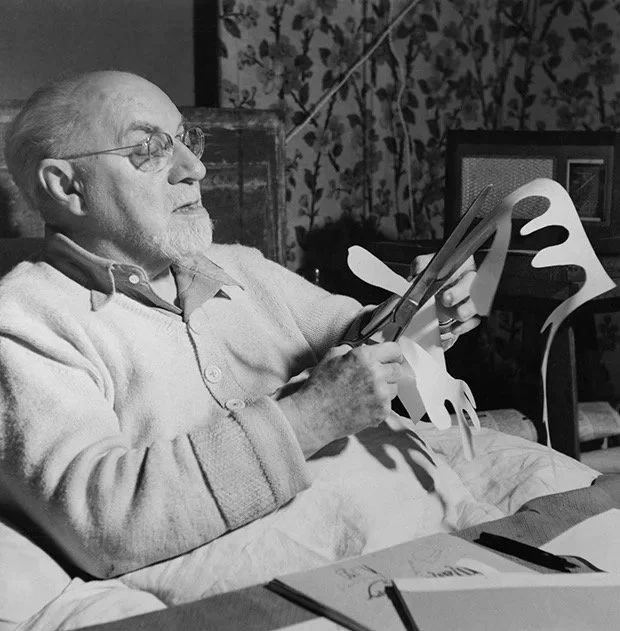
In 1941, Matisse underwent major abdominal surgery for cancer, leaving him largely bedridden and unable to stand at an easel for the rest of his life. Rather than ending his career, this forced confinement opened what he called his “second life.”
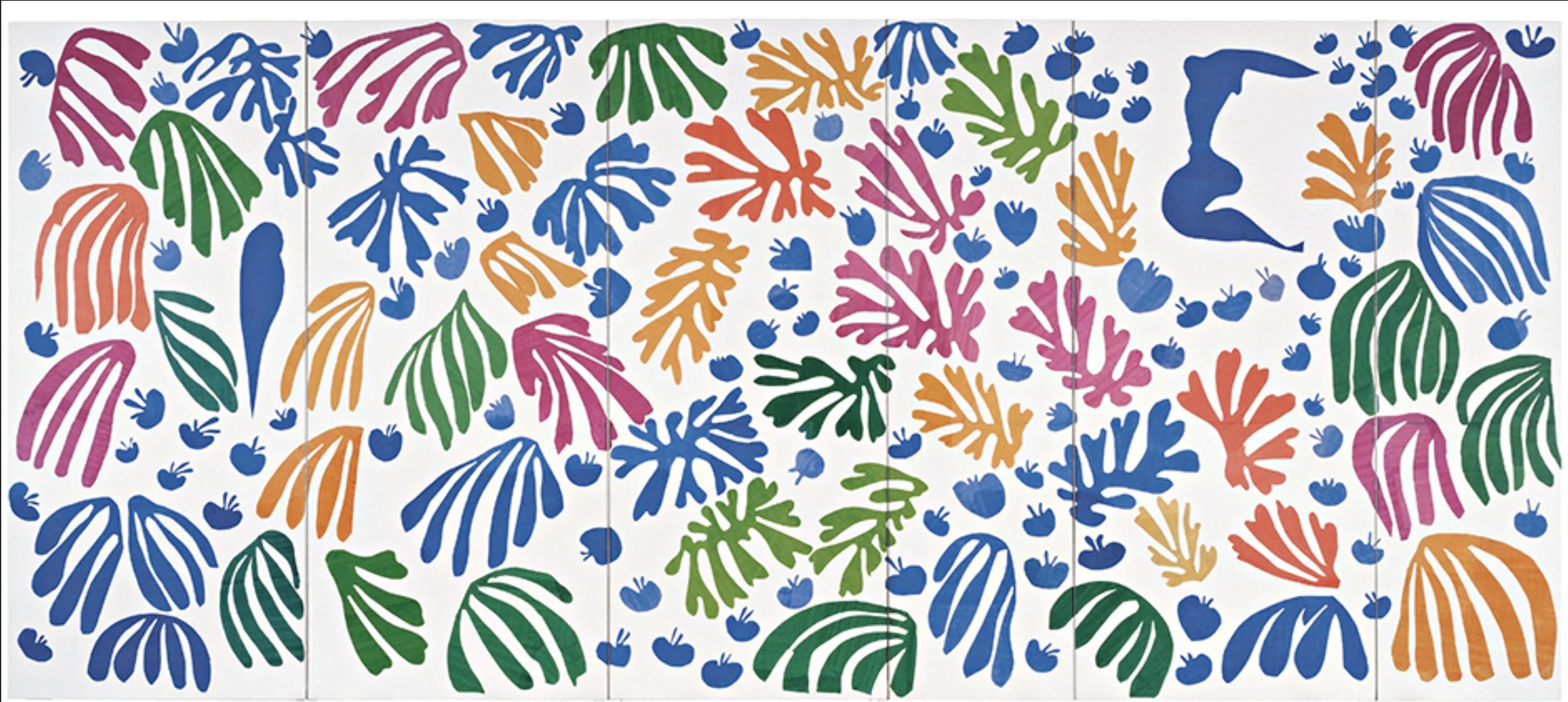
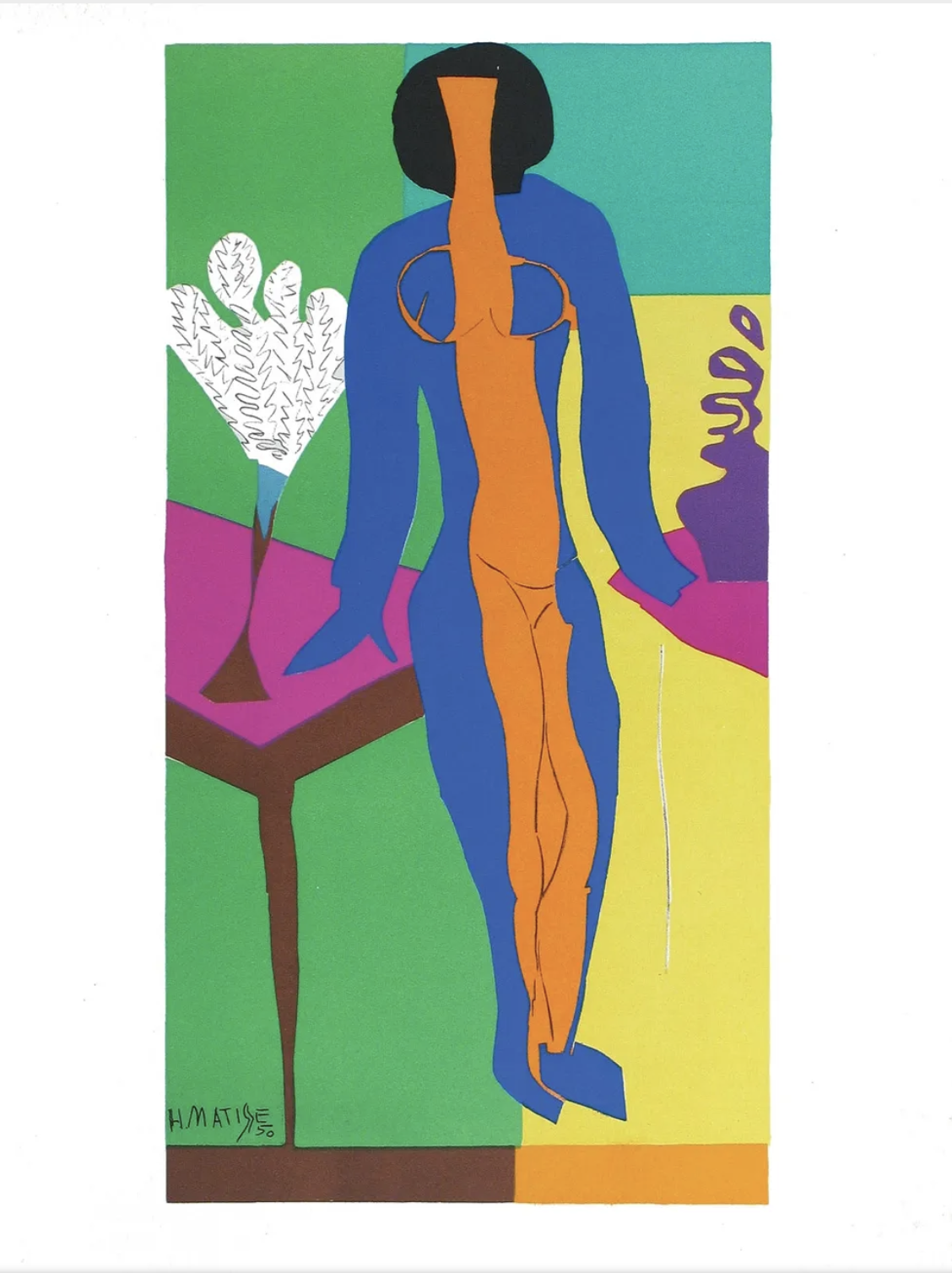
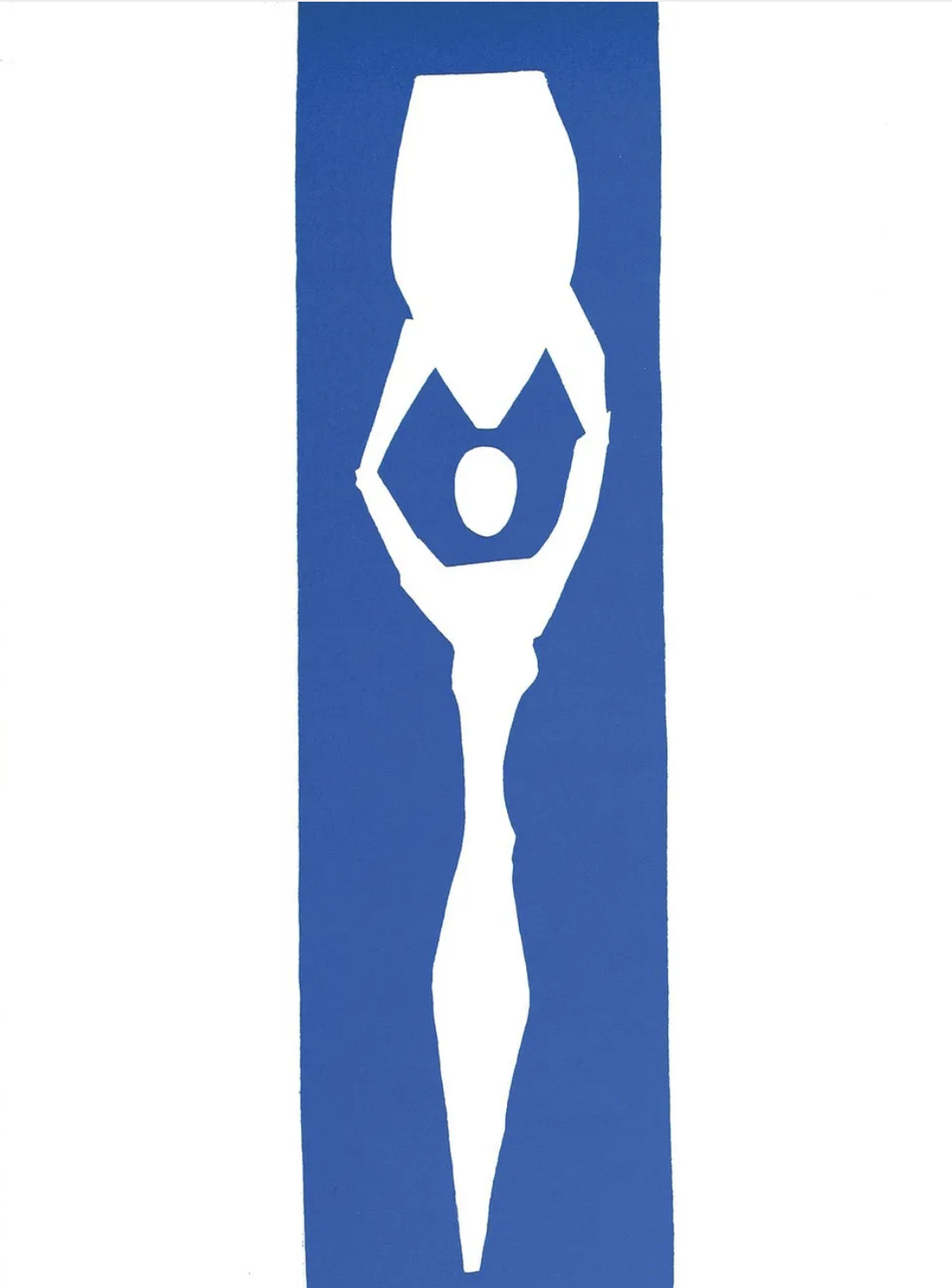
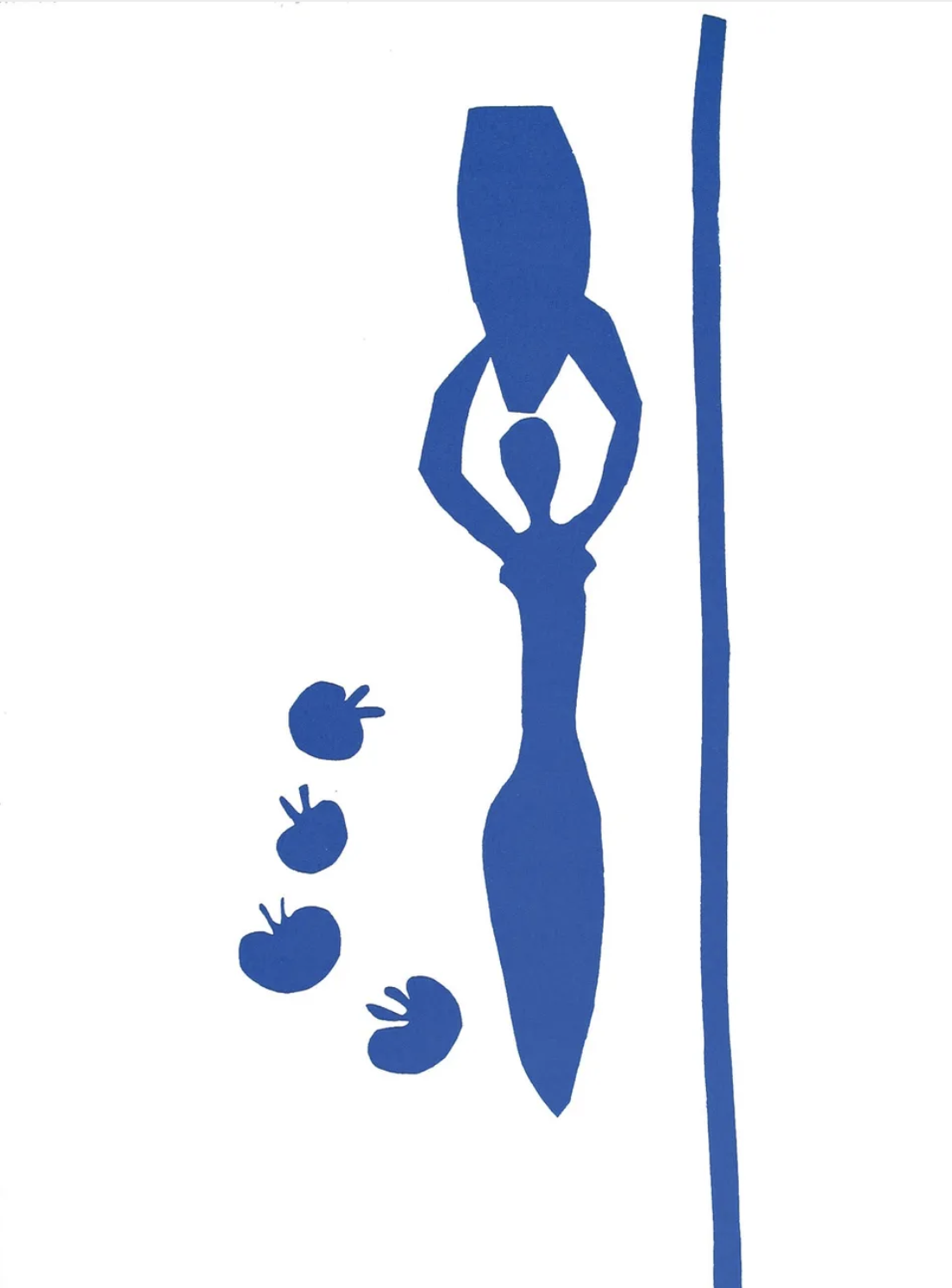
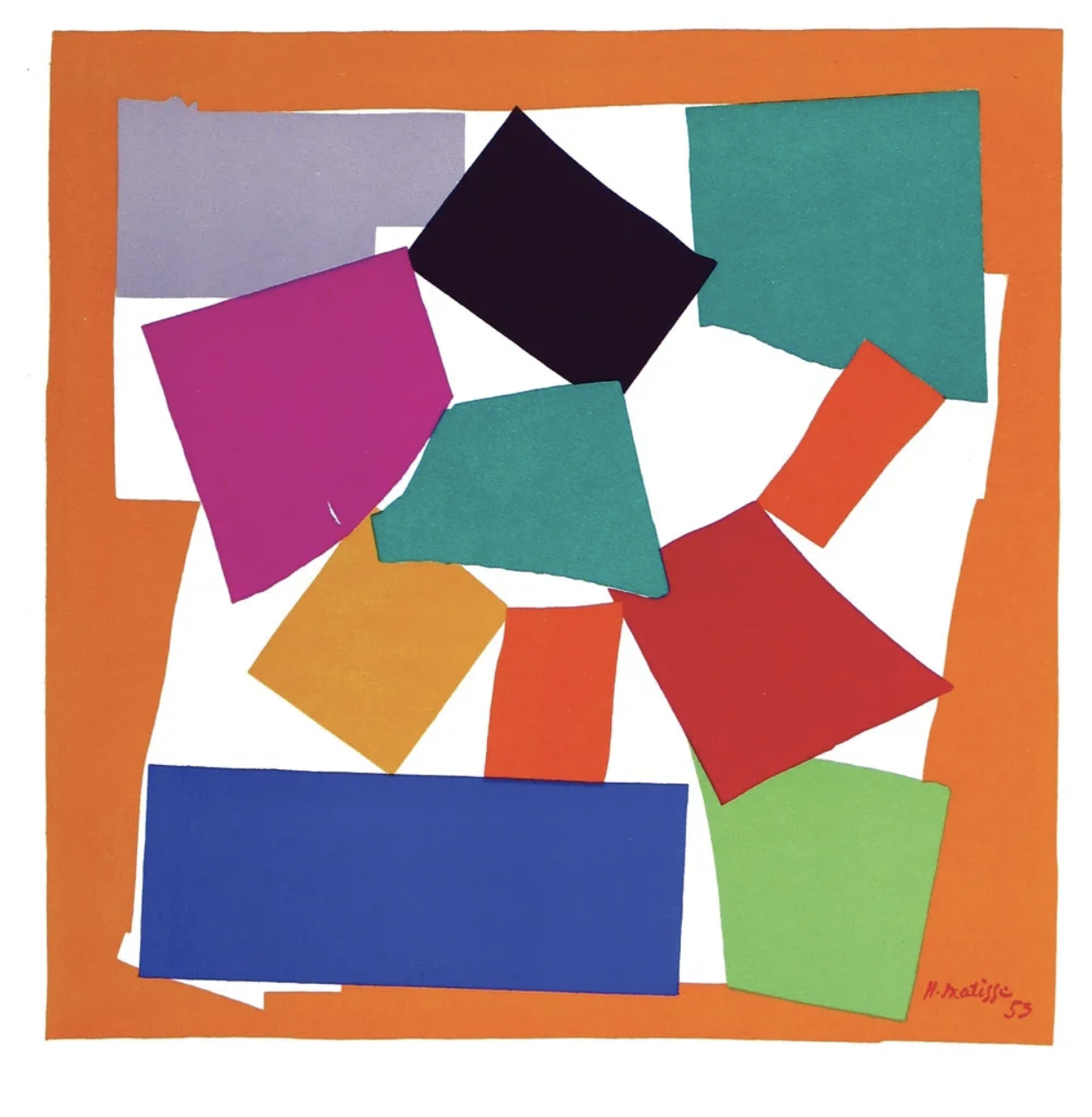
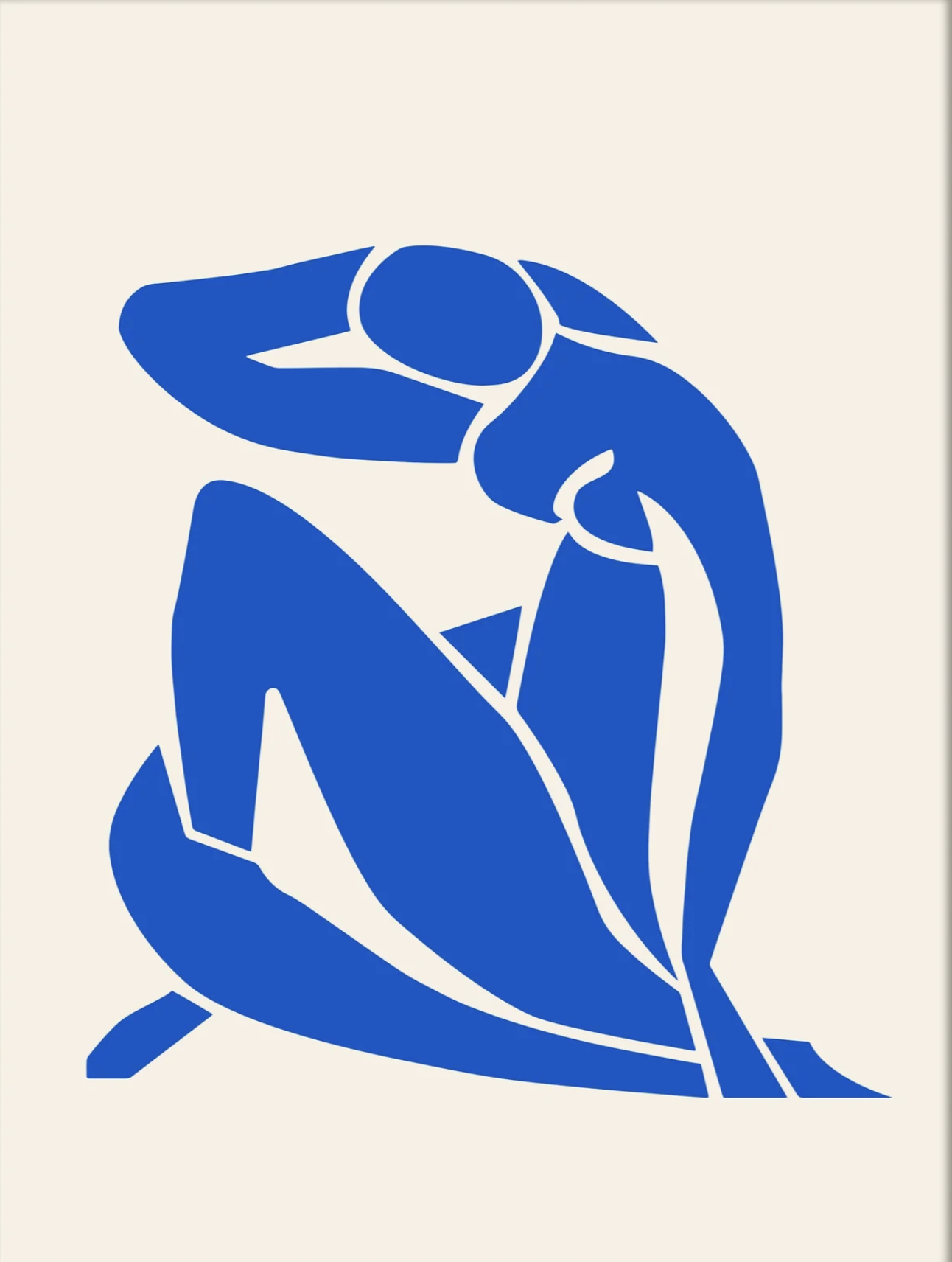
Working from a bed or wheelchair, Matisse began cutting shapes from sheets of paper that assistants had painted with vivid gouache, then directing their arrangement into compositions of extraordinary color and rhythm. He described this practice as “drawing with scissors,” a way of carving form directly from color rather than applying color to a pre-drawn line.
Far from a diminished late style, the cut-outs are now considered among the most radical and influential works of his career, anticipating the flat planes and graphic clarity that would shape design and abstraction for decades to come.

“JAZZ” by HENRI MATISSE
▫
“JAZZ” by HENRI MATISSE ▫
How a book of collage work became another major turning point in modern art.
⇣ Use the arrows on either side to scroll through the pages ⇣
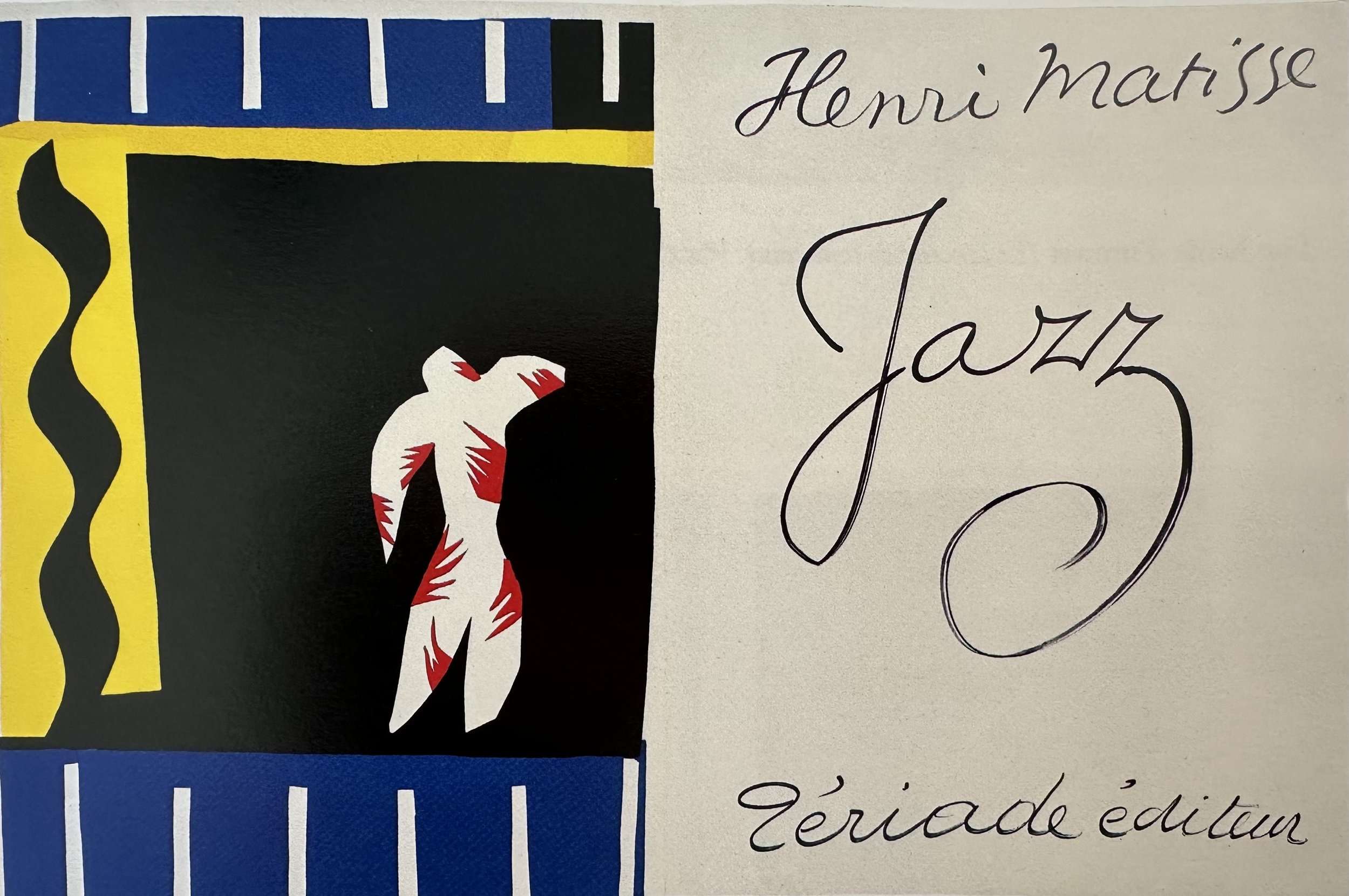
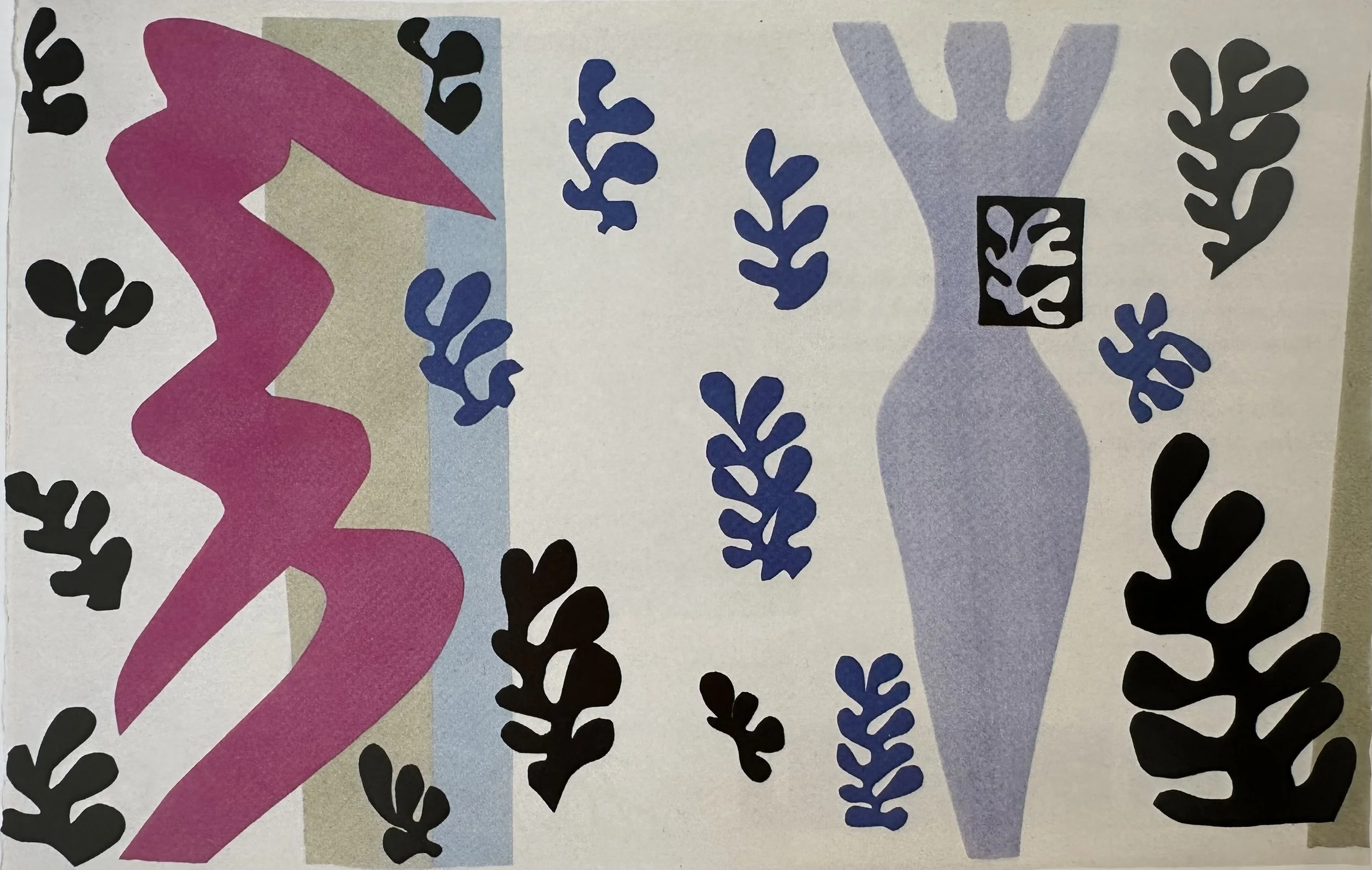
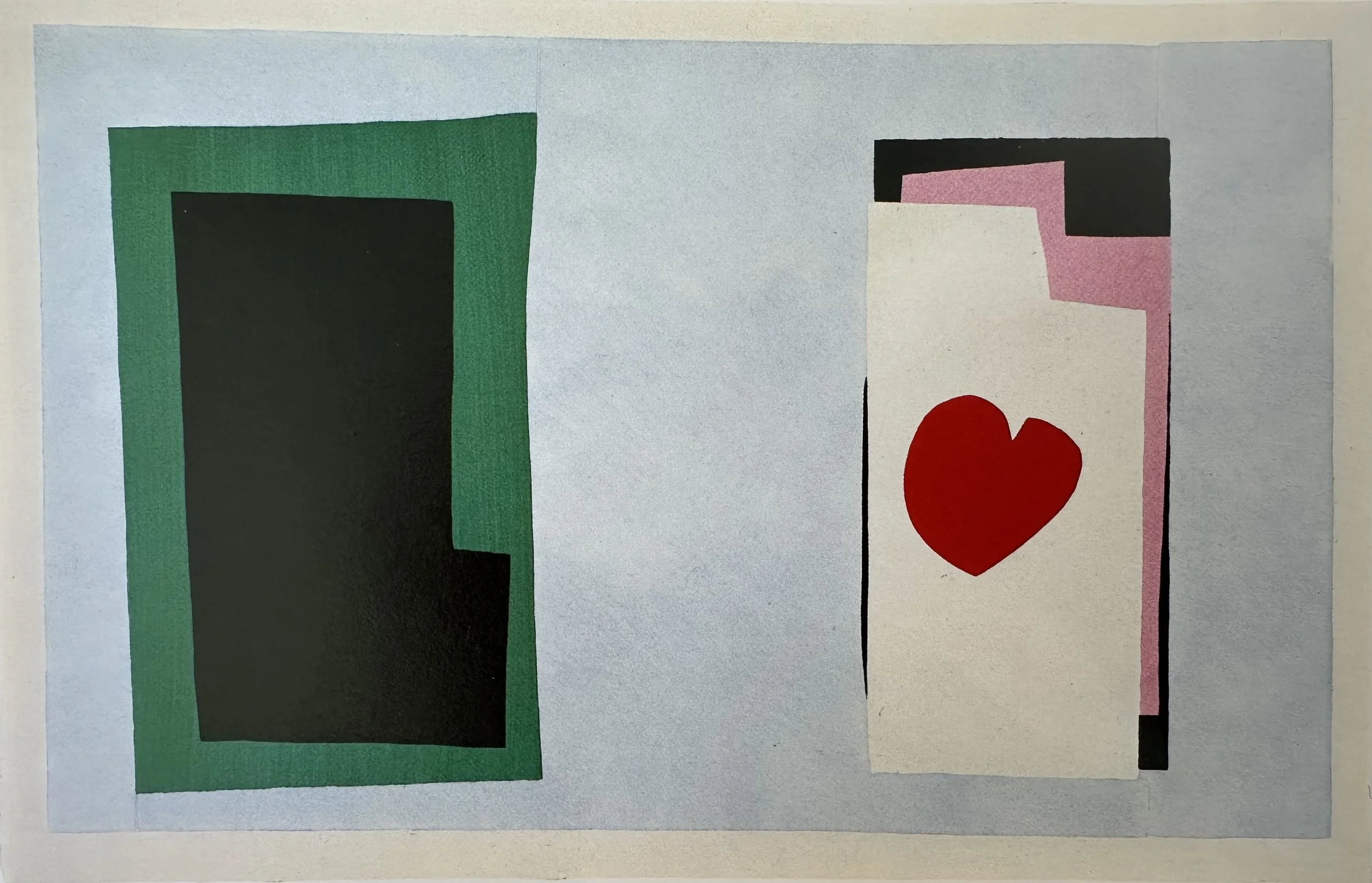
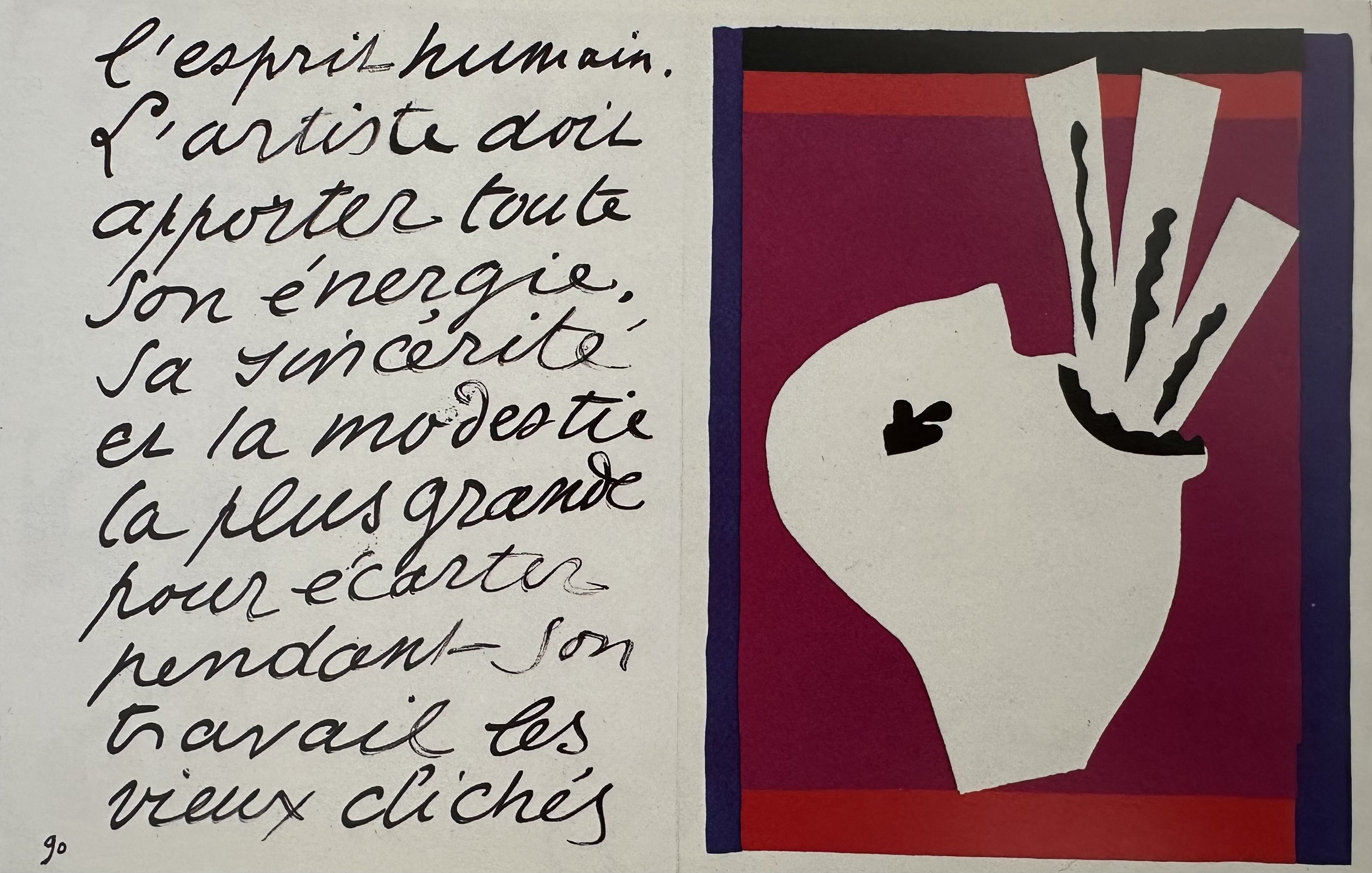
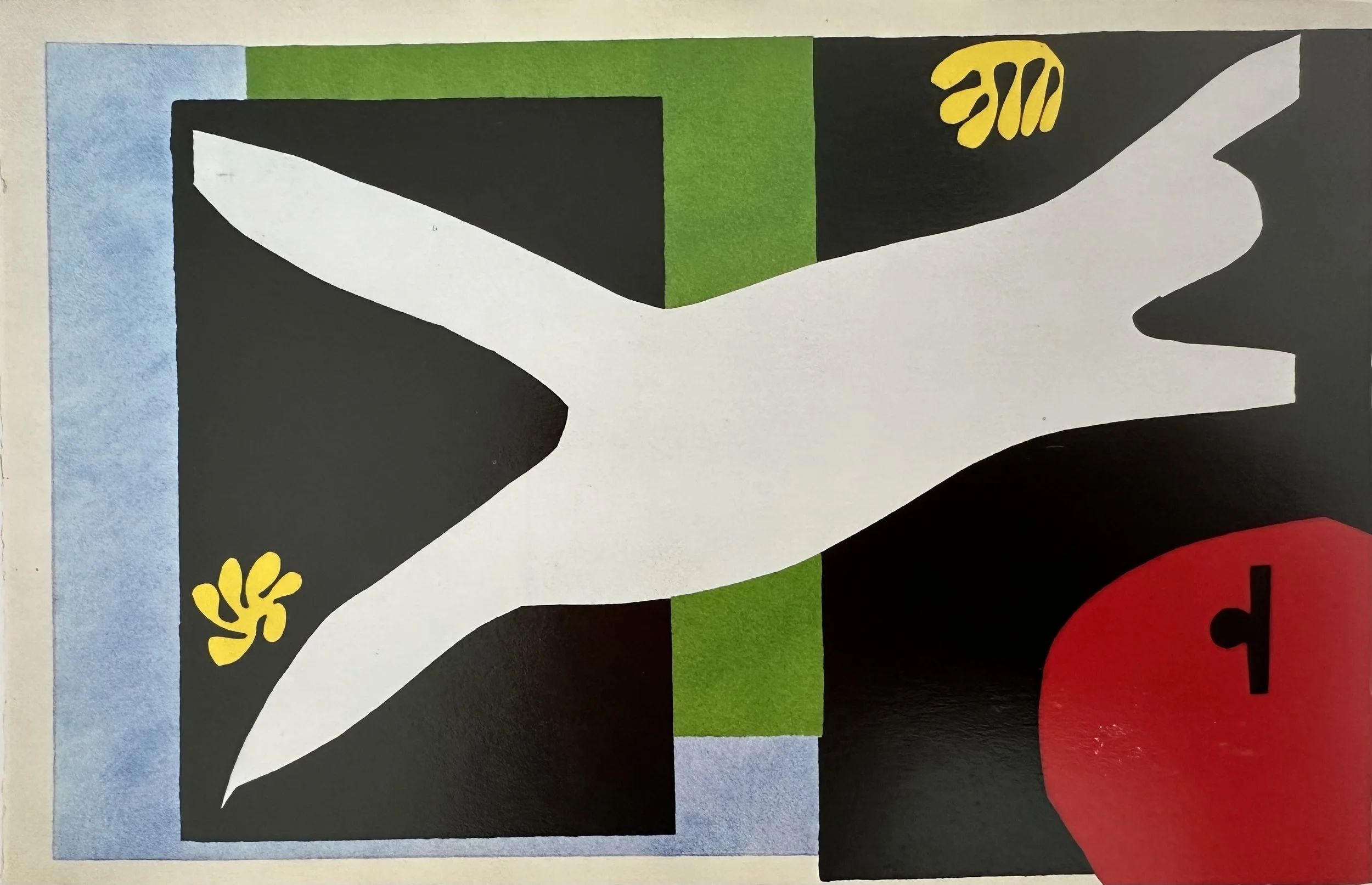
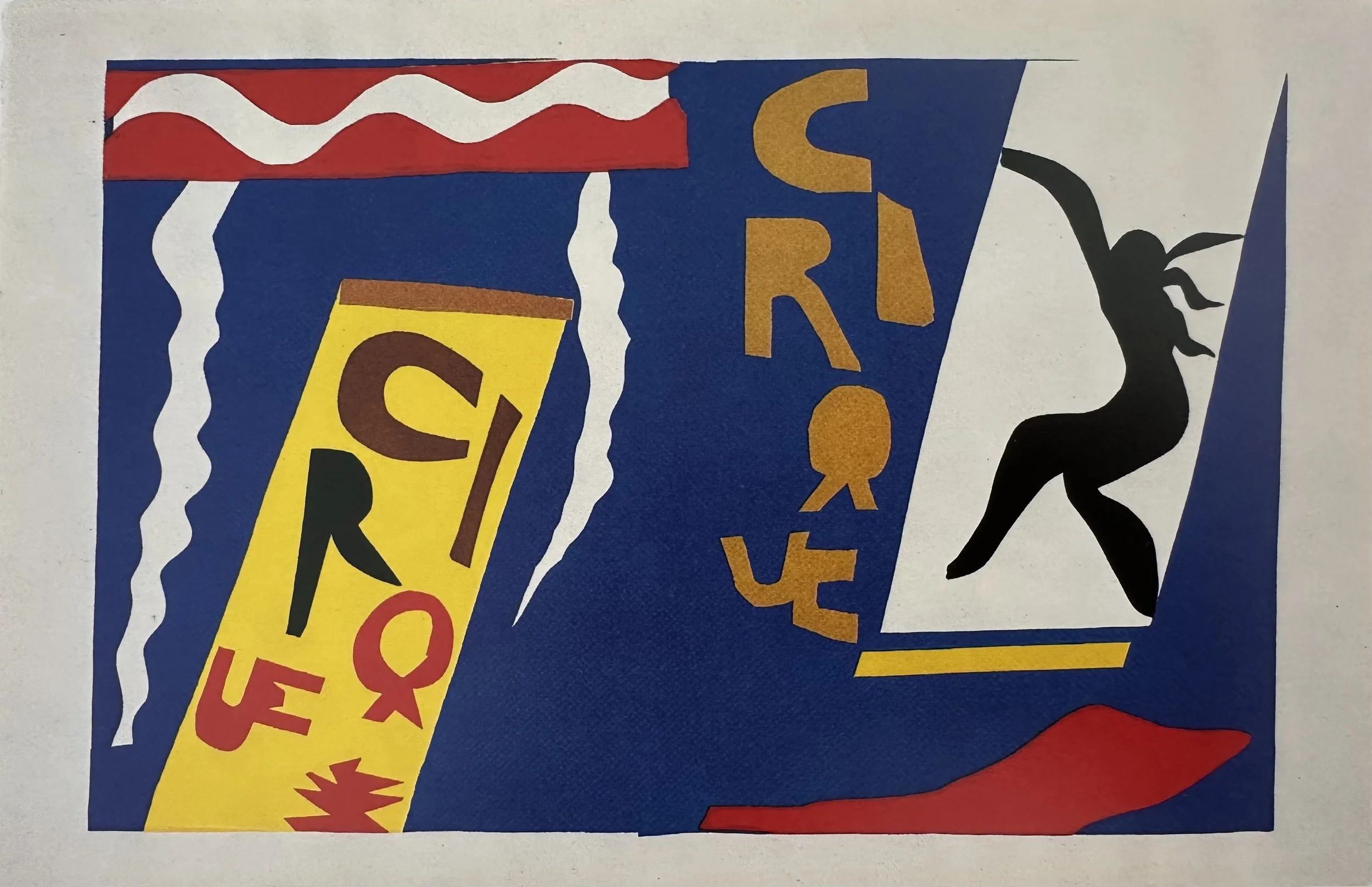
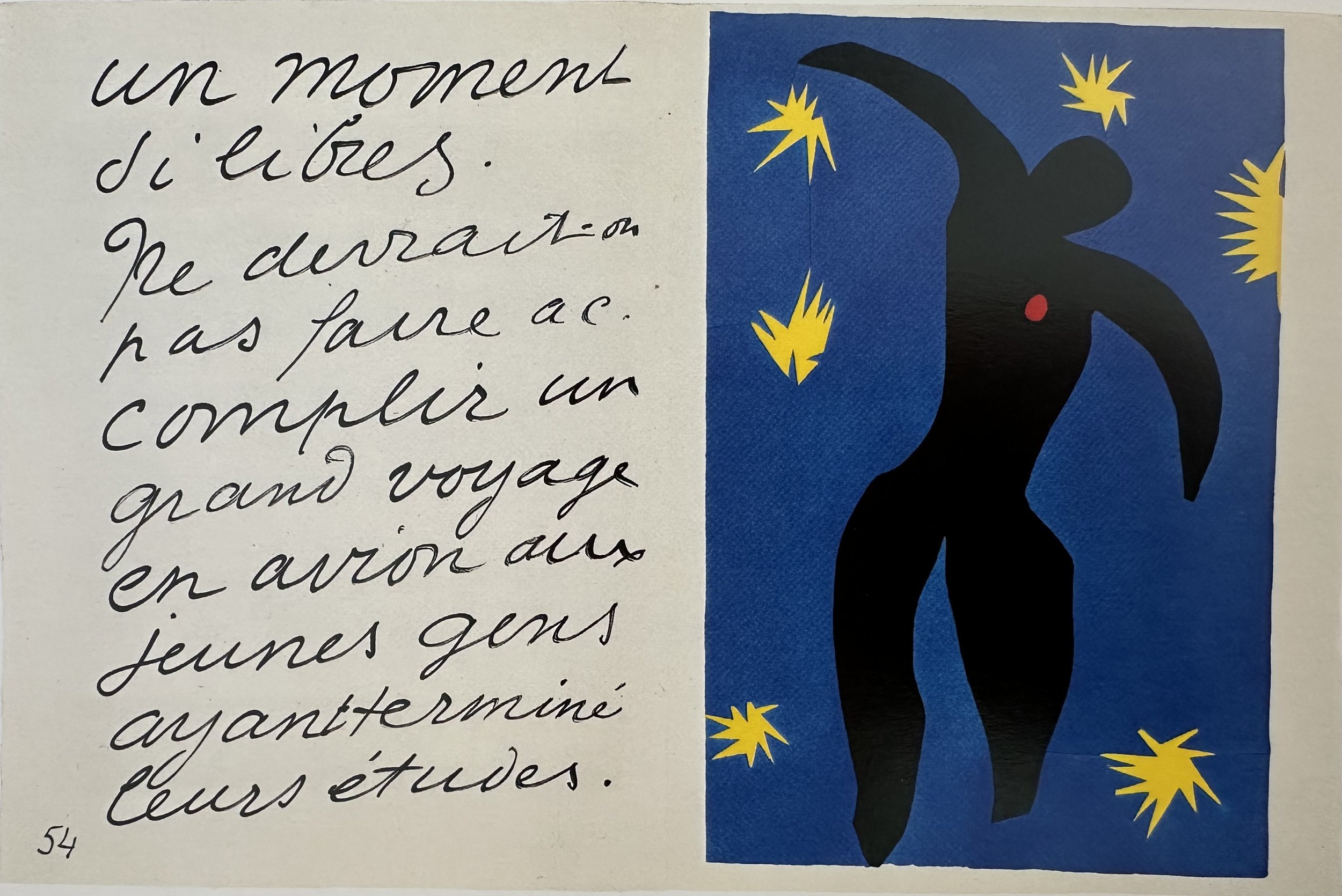
Created mostly in 1943, “Jazz” was published in 1947, and is Matisse’s first major collection of cut-outs.
A series of twenty hand-stencilled plates paired with pages of his own handwritten text, was produced while he was largely confined to bed following surgery. Matisse chose the title not to illustrate music but to evoke the spirit of improvisation as each plate feels spontaneous and alive, shaped by the direct, scissor-cut gesture he called "drawing with scissors." The colors are vibrant, saturated, flat fields such as red, blue, yellow, green, magenta and black.
Widely regarded as a turning point in modern art, “Jazz” demonstrated that collage could be as serious and resonant a medium as painting, and it remains one of the most joyful objects in the entire history of art.
Watch the video to see the work up close and learn more.
Video Length: 2:51 minutes
Drawing with Scissors
There are an extraordinary amount of resources, interesting articles and videos regarding the Cut Outs. The museums and curators can do a much better job explaining and illustrating this period of Matisse’s life than I. In this section you will find my curated selection of fun, insightful and important links and videos showcasing this later part of Matisse’s life.

Interactive Website
Click on the MoMA logo to visit a fun, interactive website that includes amazing photos of Matisse’s studios, his assistants, and his work.

VIDEO COLLECTION
▫
VIDEO COLLECTION ▫
Watch these excellent videos that explain in great detail, and with beautiful photography, the history and stories of the Cut-Outs.
The Tate Museum’s Exhibition
Video Length: 4:19 minutes
Matisse: A Cut Above the Rest
Video Length: 29:29 minutes
GALLERY
▫
MATISSE CUT OUTS
▫
GALLERY ▫ MATISSE CUT OUTS ▫
⇣ Click on any image to view larger ⇣
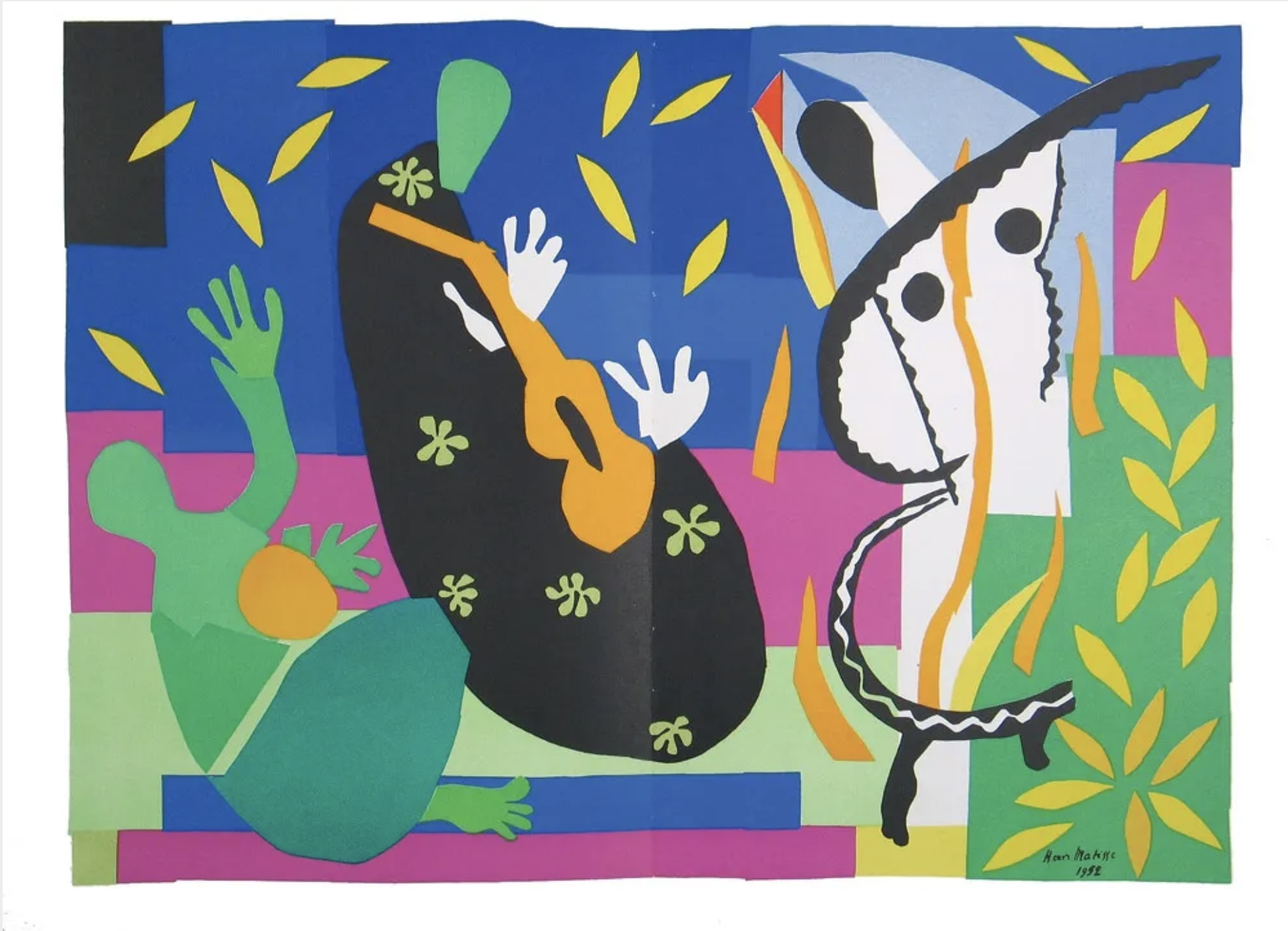
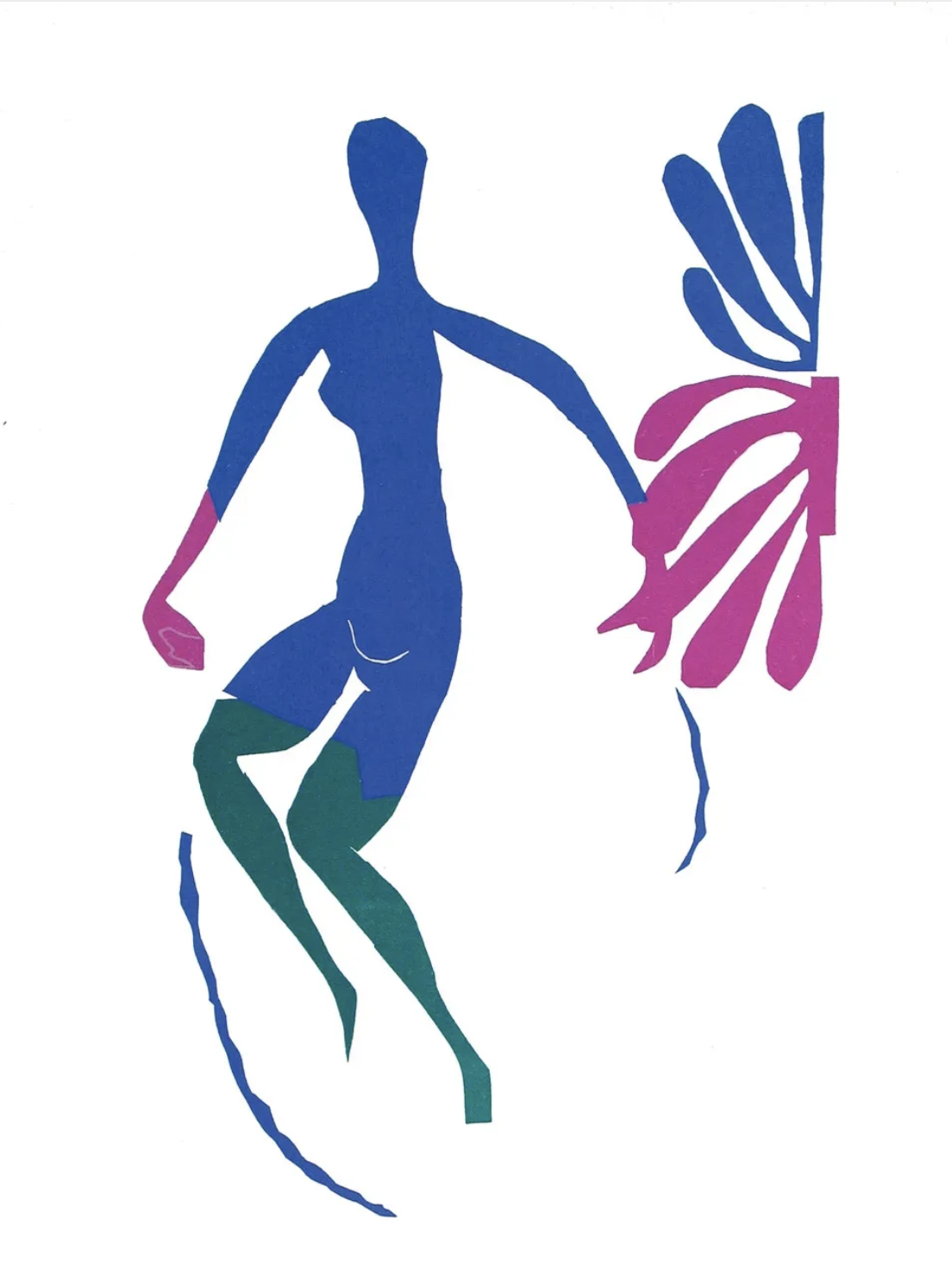
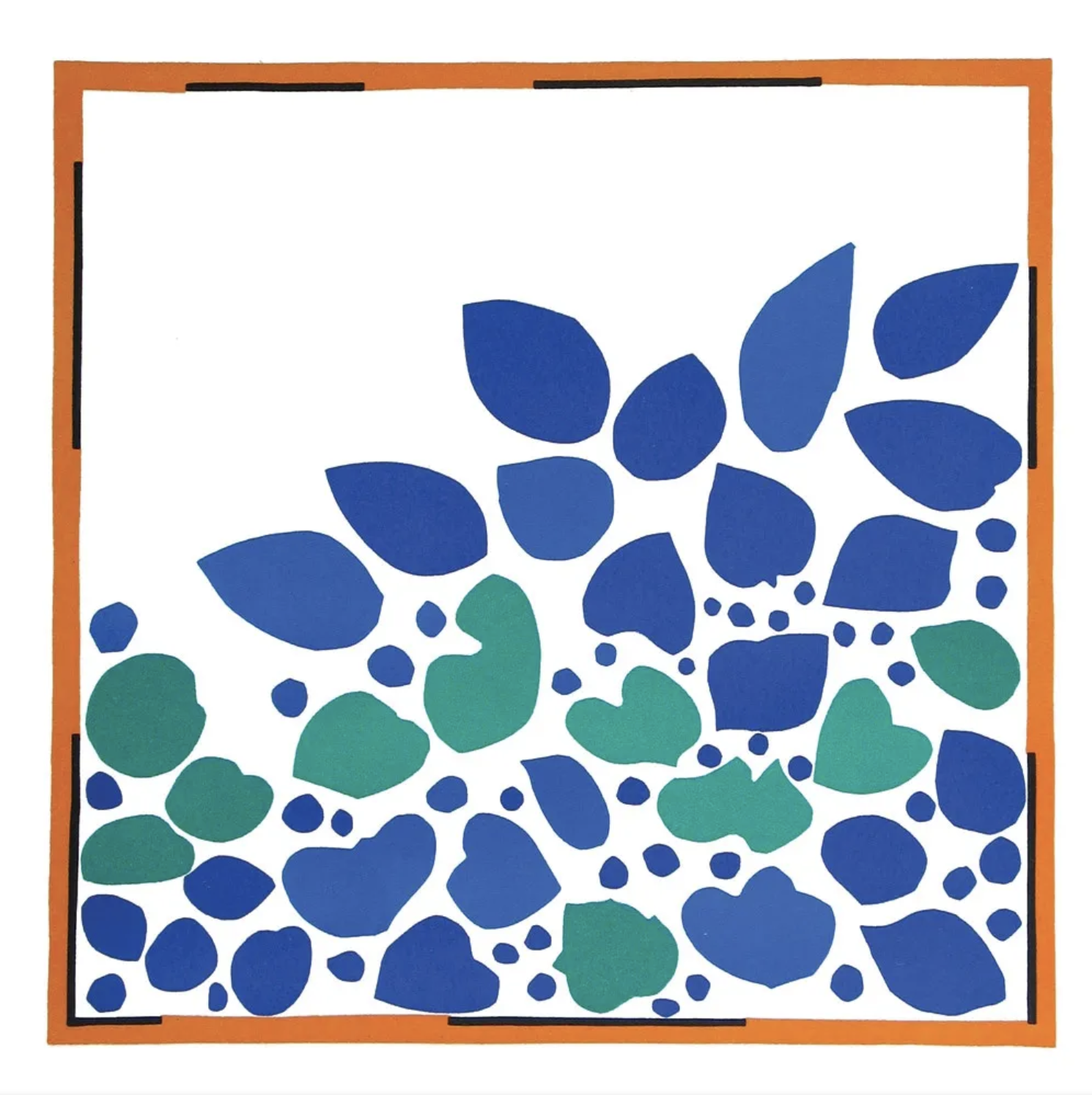
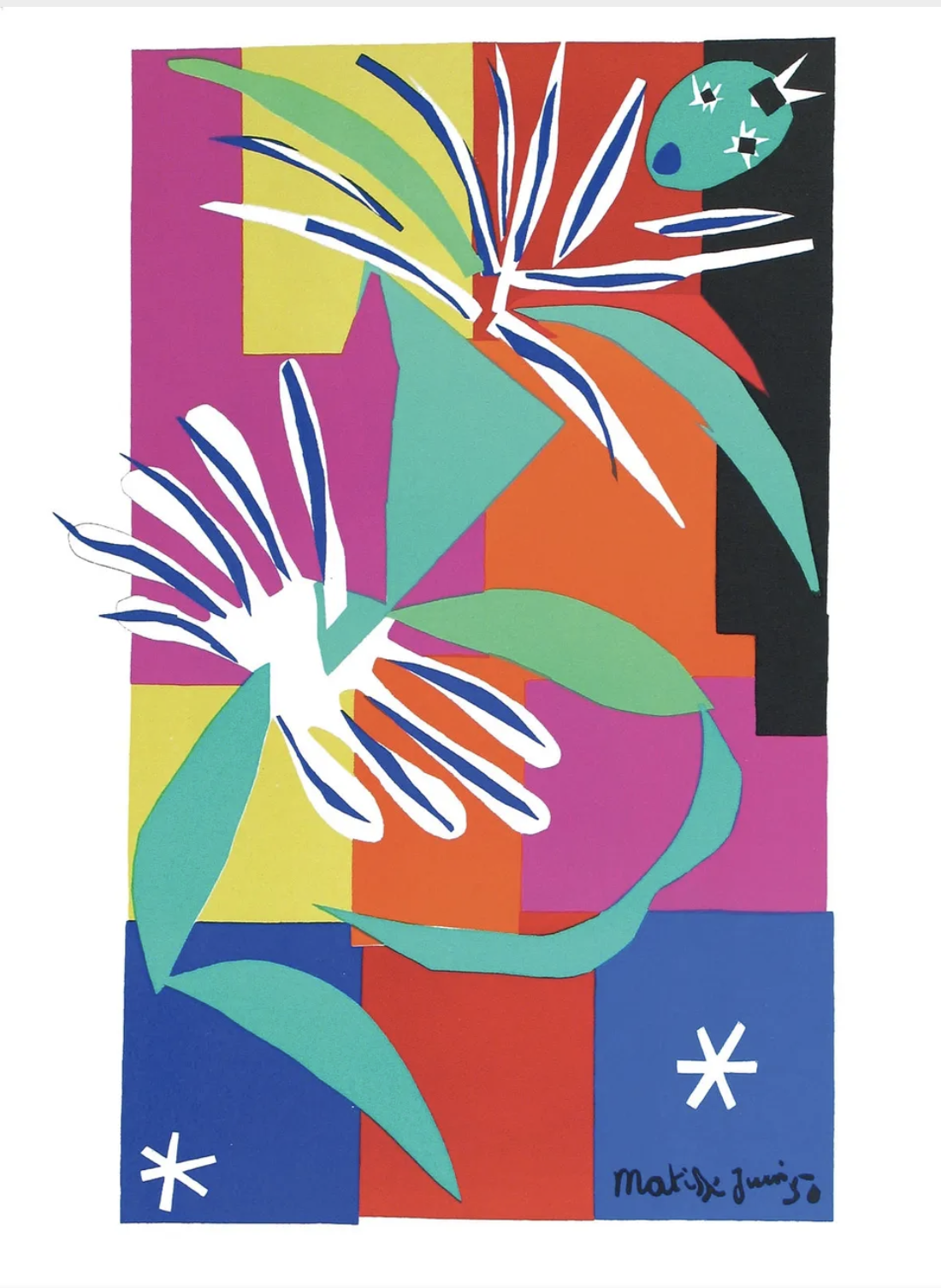
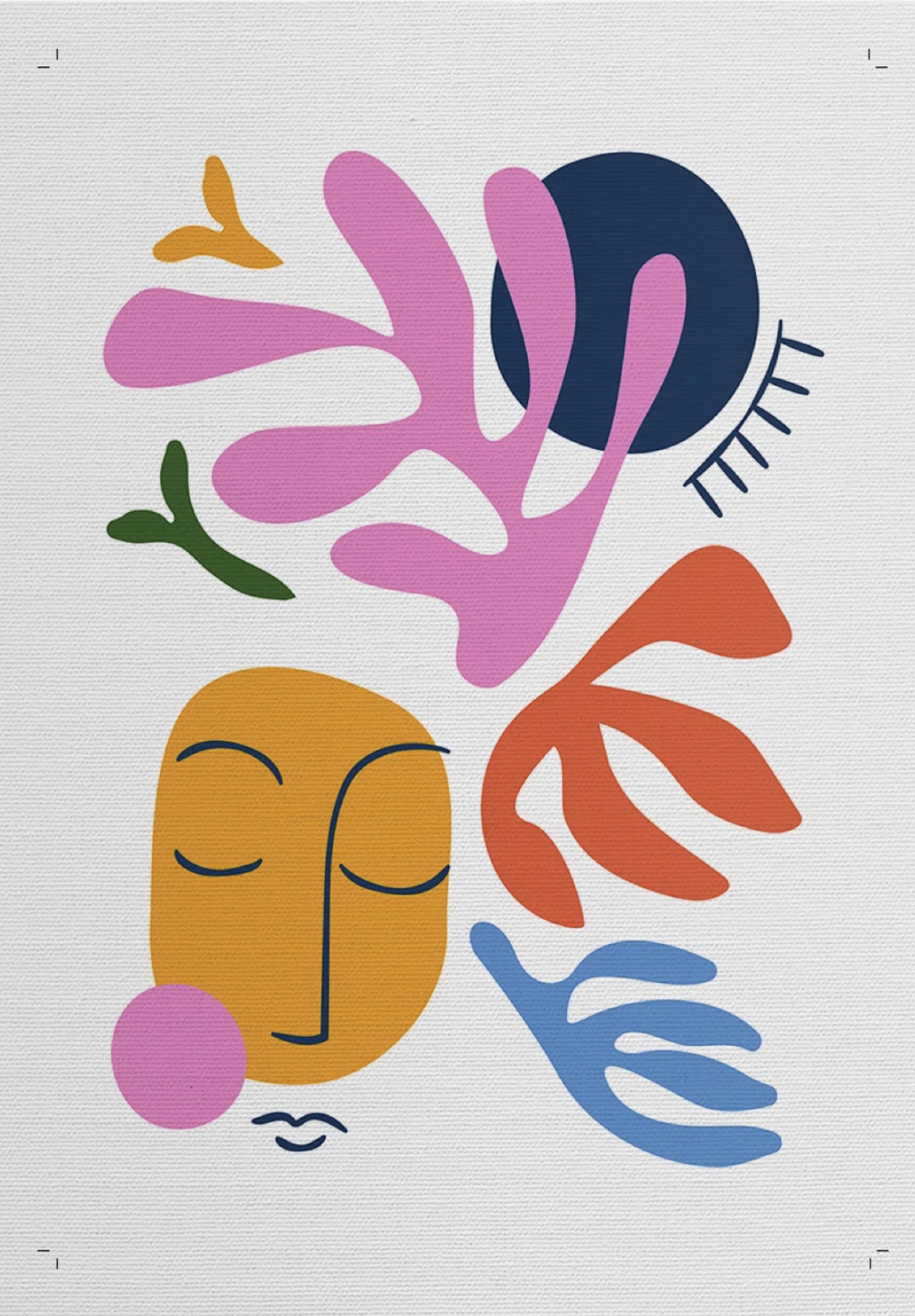
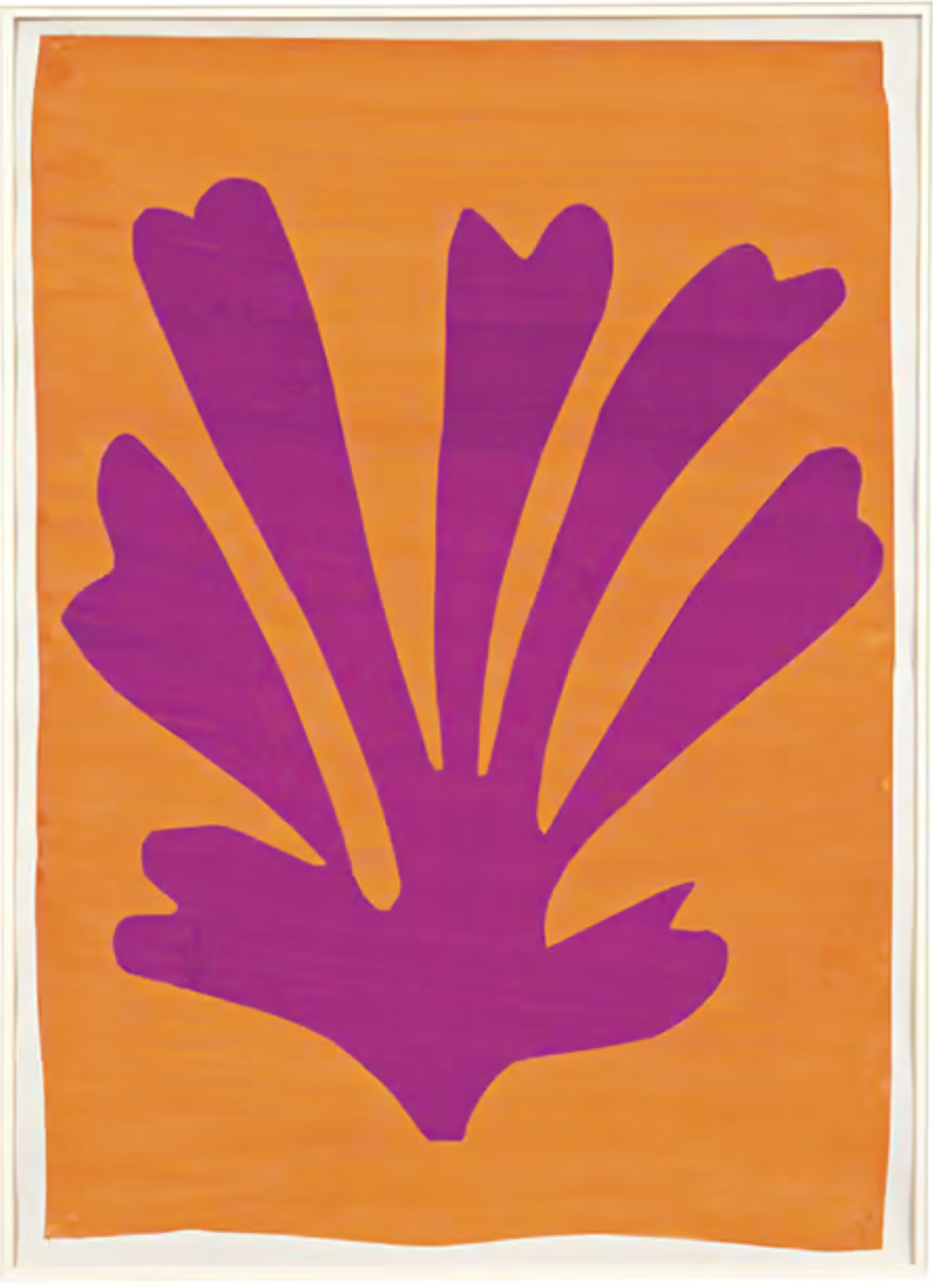
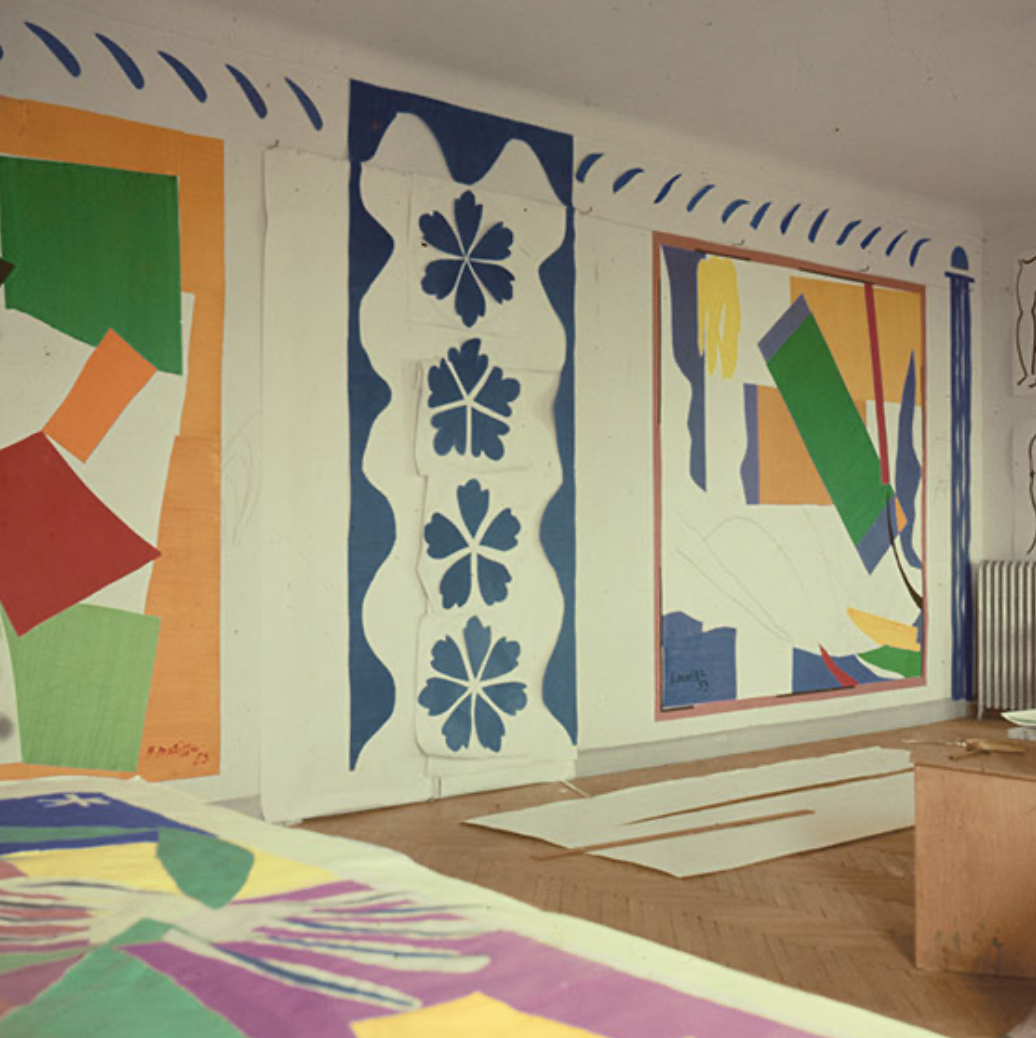

project
Drawing with Scissors
This project was surprisingly fun! I highly recommend it. I describe the process and approach in the video below.
Video Password: Paper
Video Length: 11:19 minutes
PROJECT EXAMPLES
▫
PROJECT EXAMPLES ▫
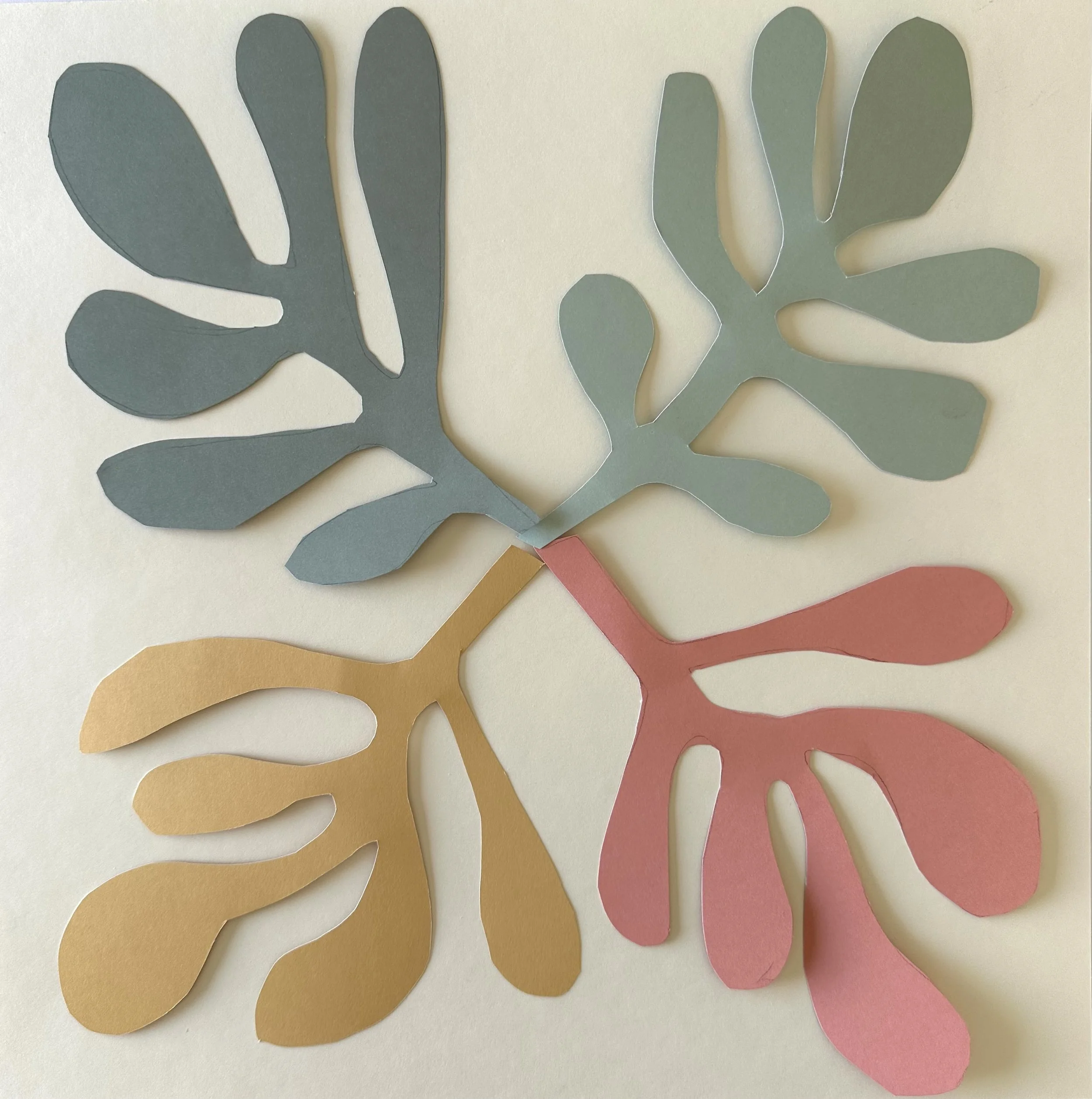
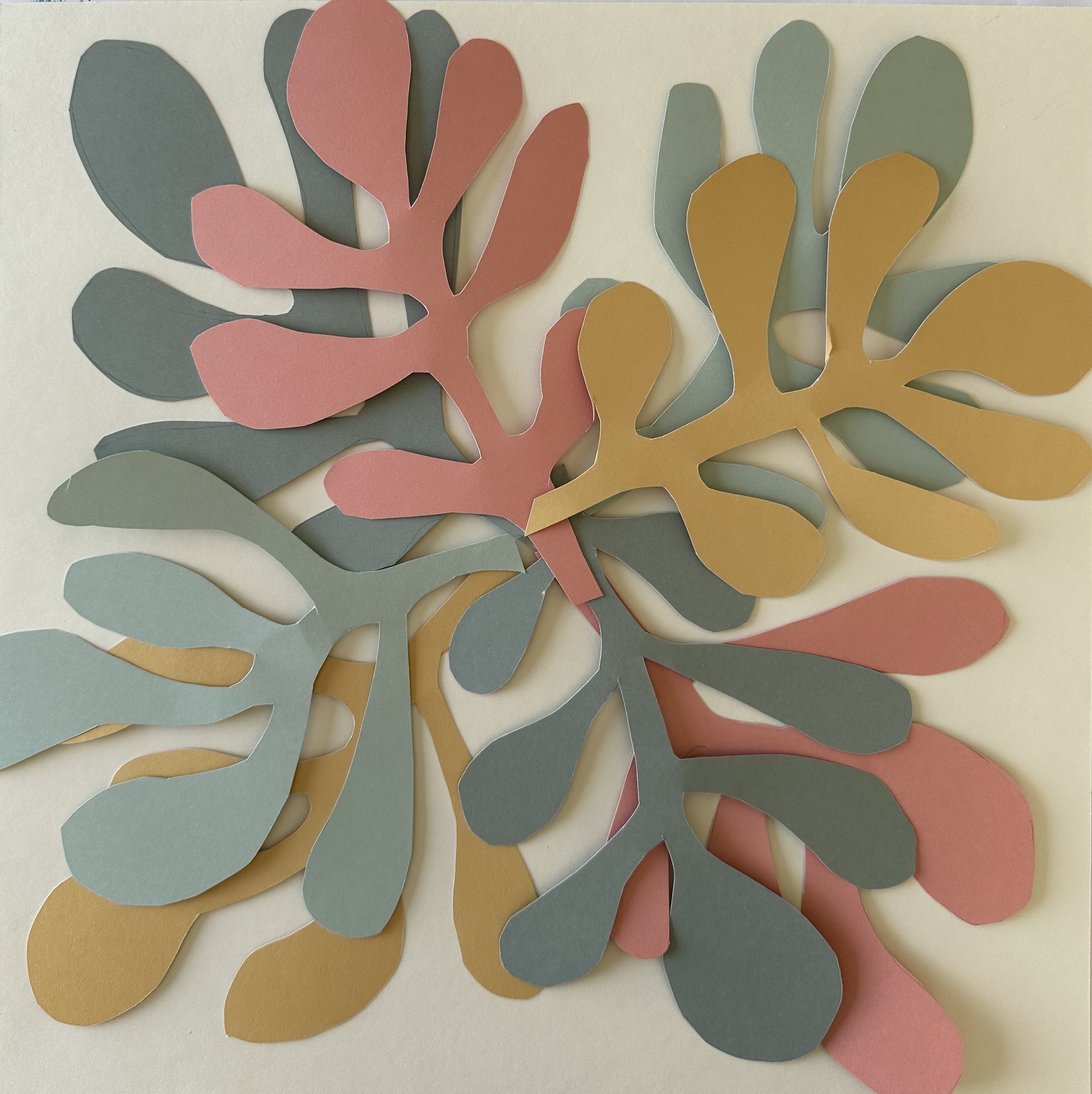
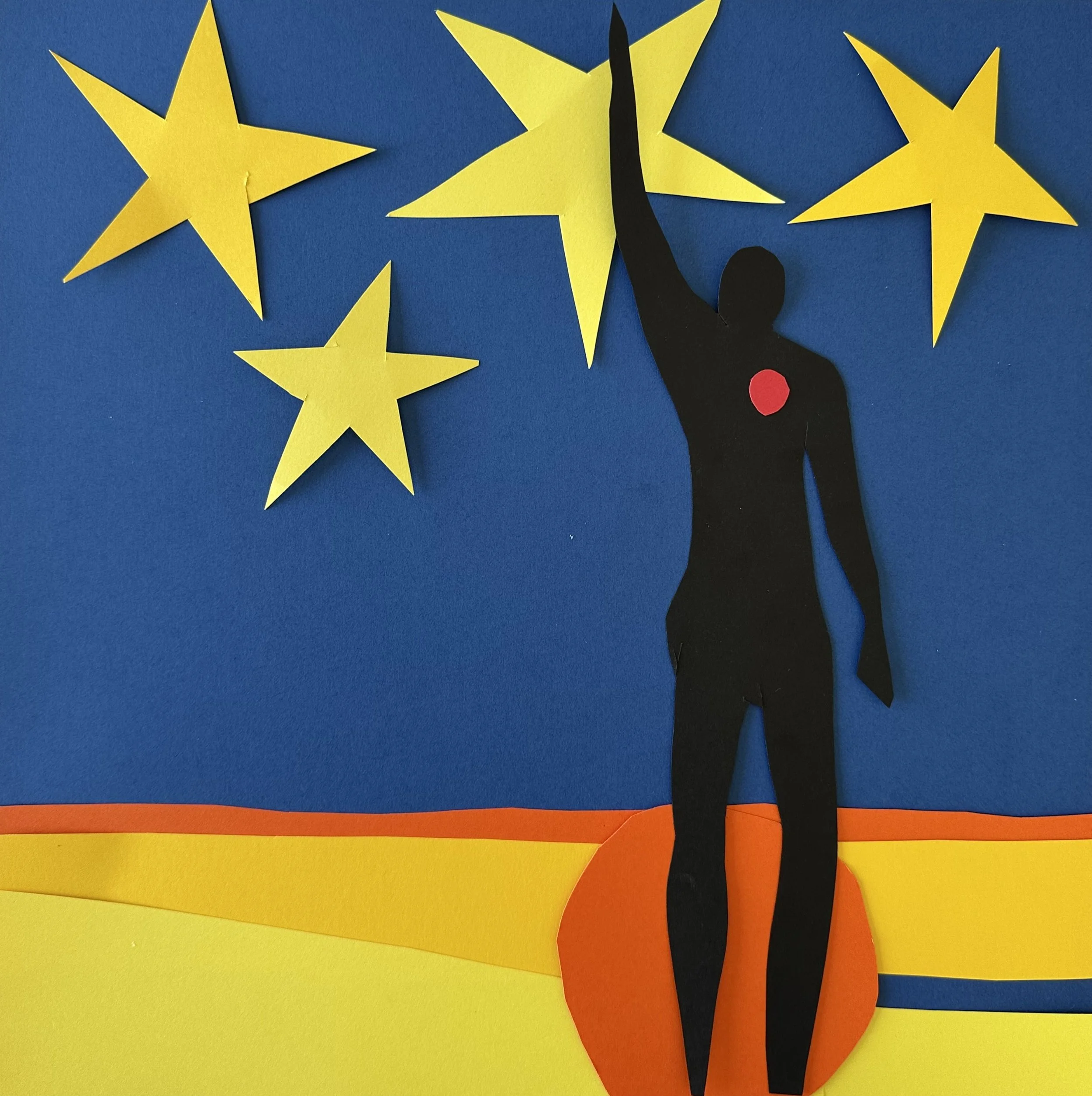
Feel free to print out the PDF below and use it for this project.
I do recommend that you also design and cut your own shapes too.
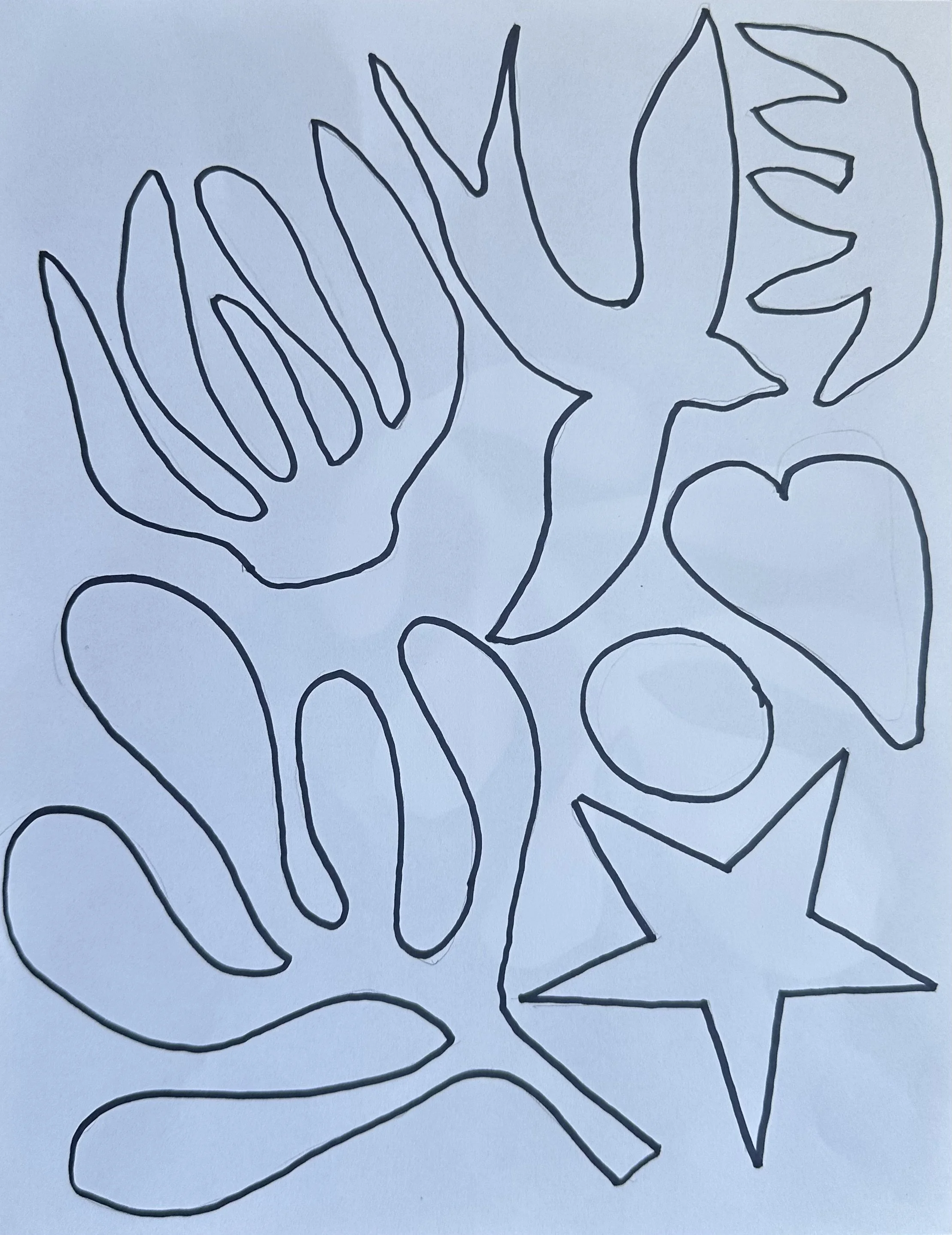
CUT OUT TEMPLATE
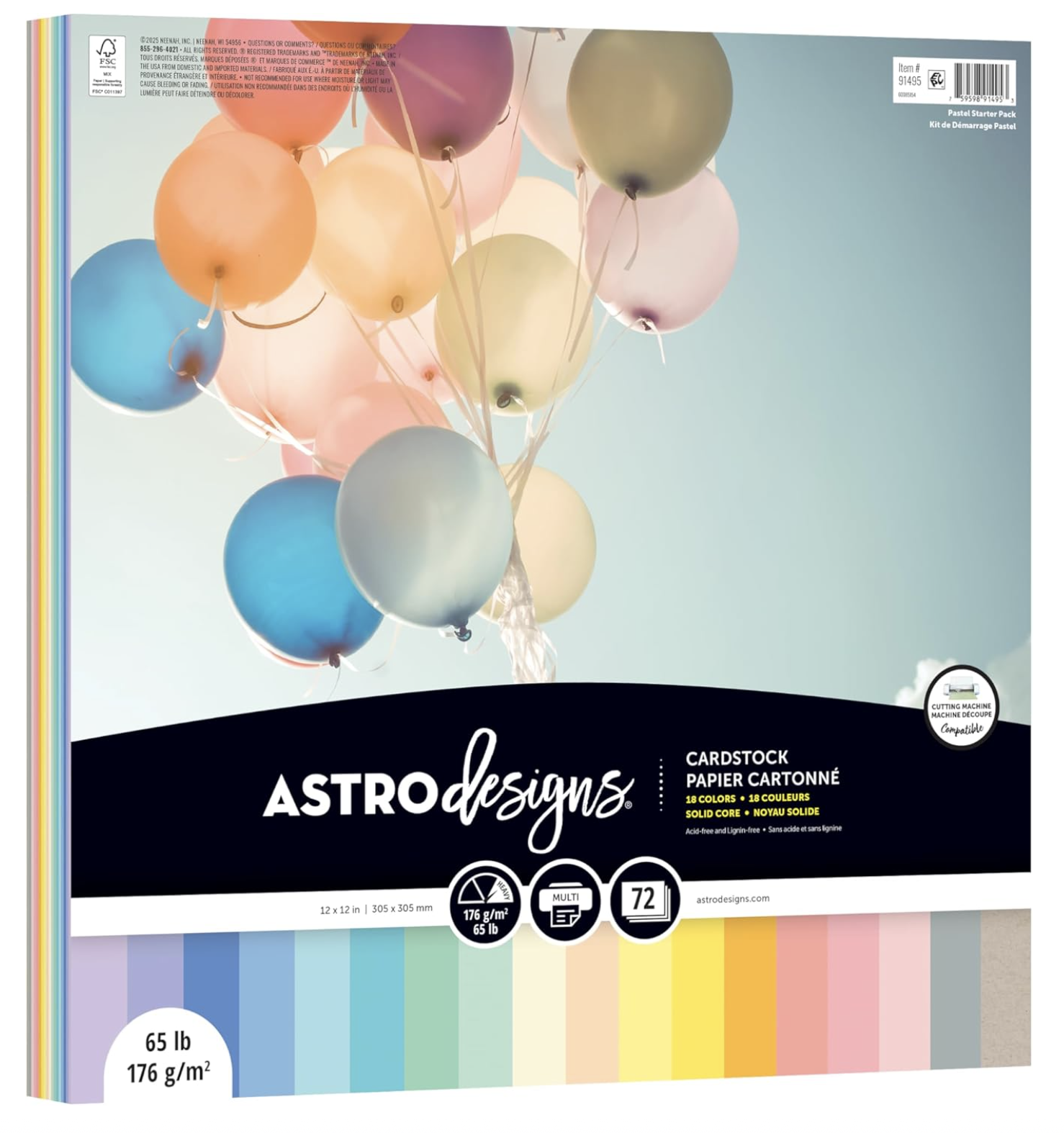
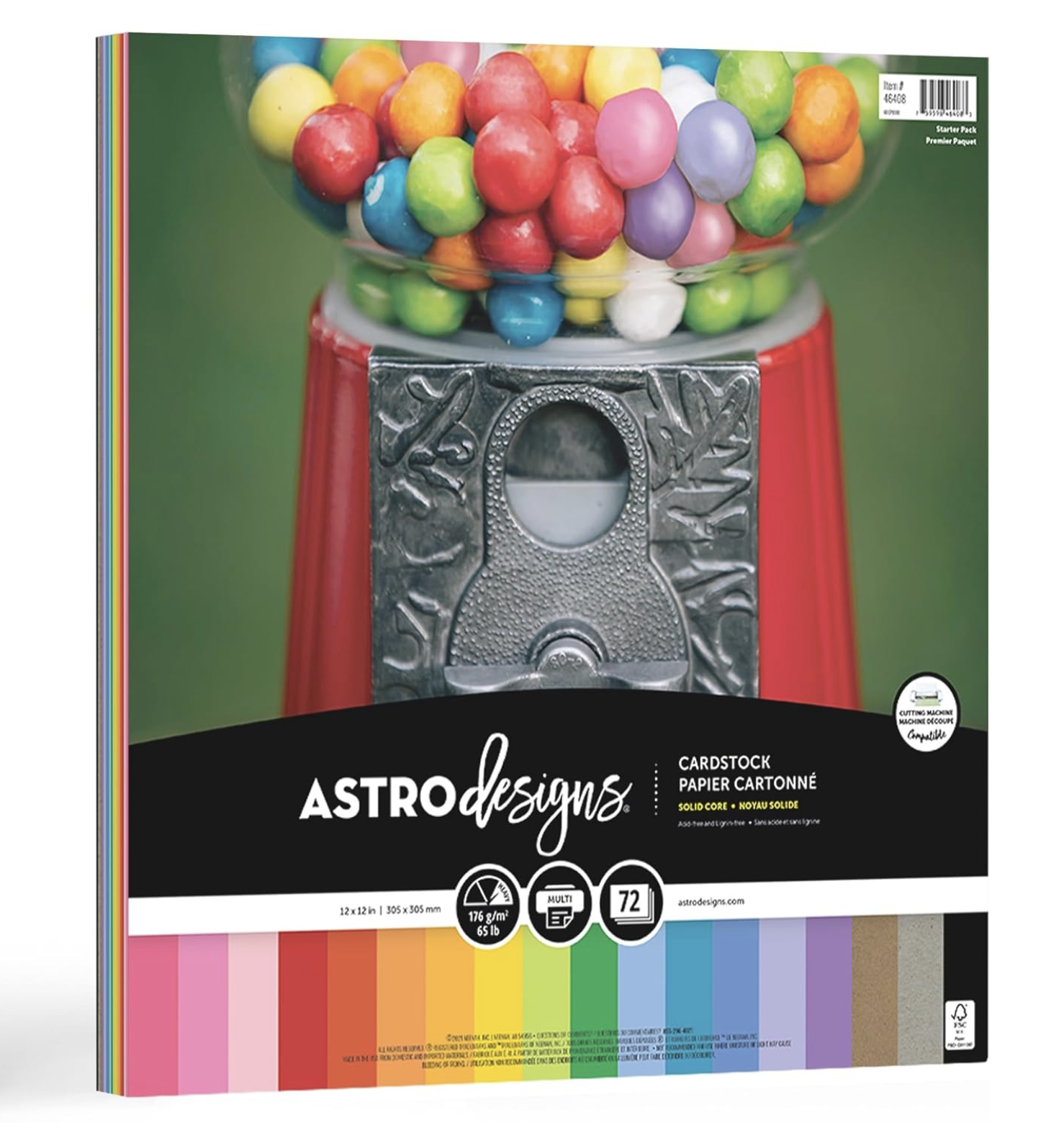
Matisse painted his papers with gouache. I used store bought colored paper. If you prefer to purchase your colored papers, click on the button below to go to the MATISSE COURSE PRODUCTS page to purchase.